

DERCOM’s difference
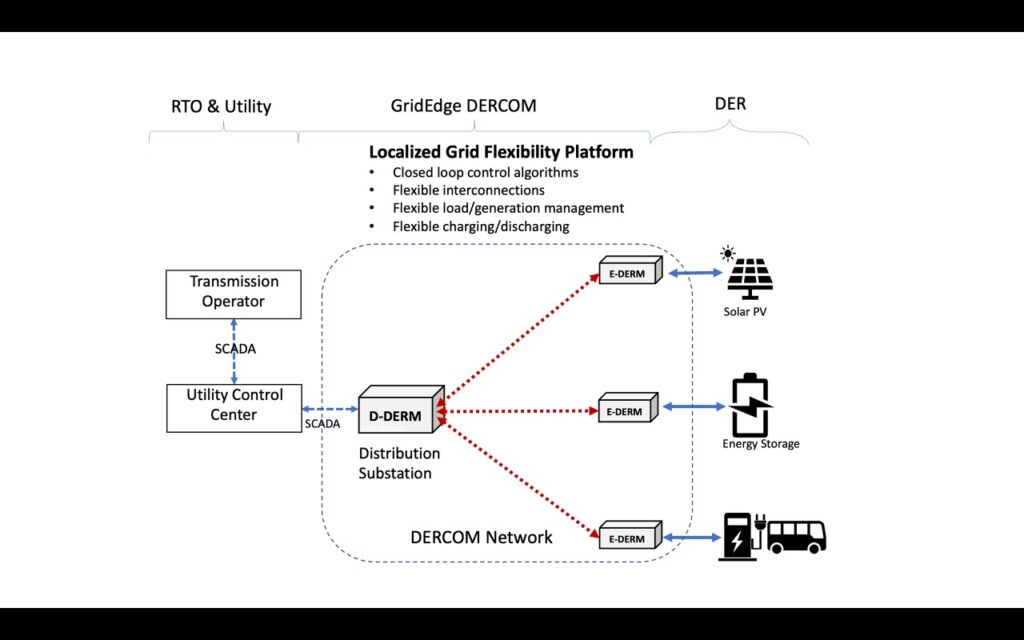
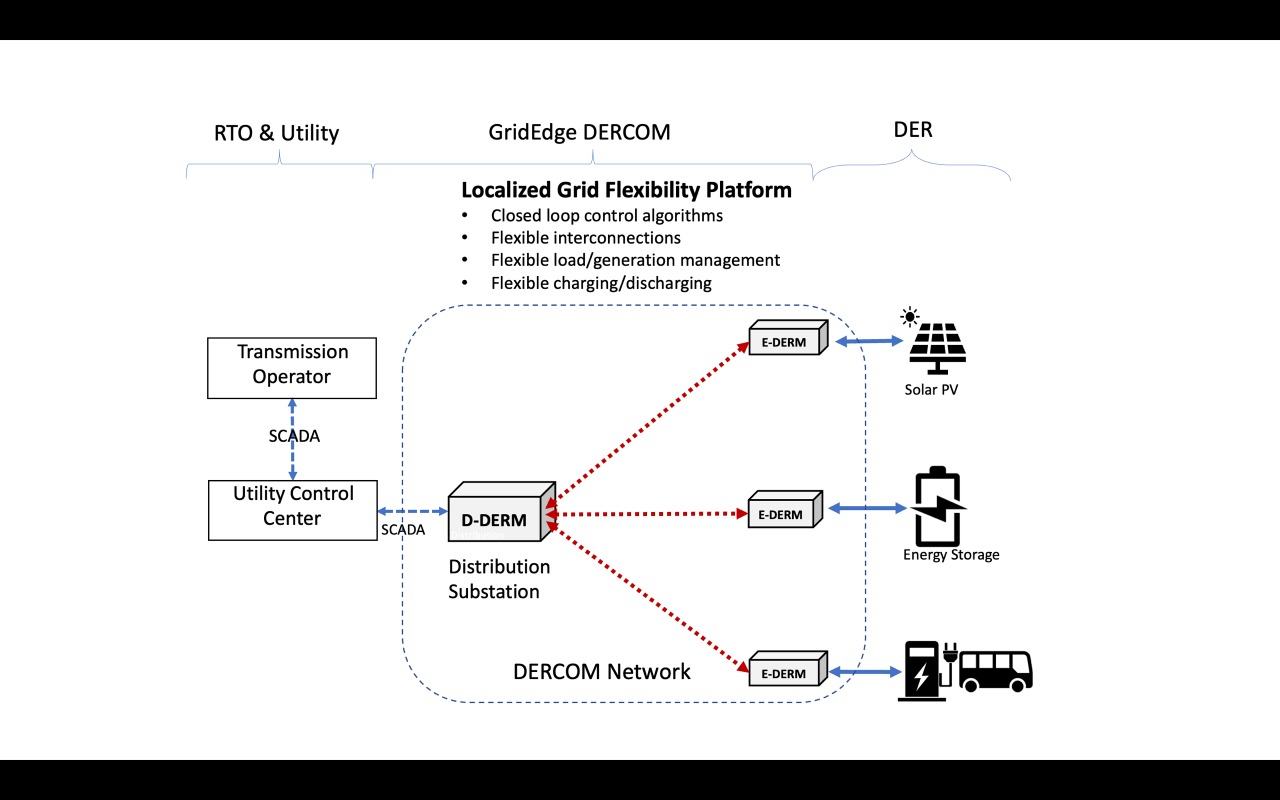
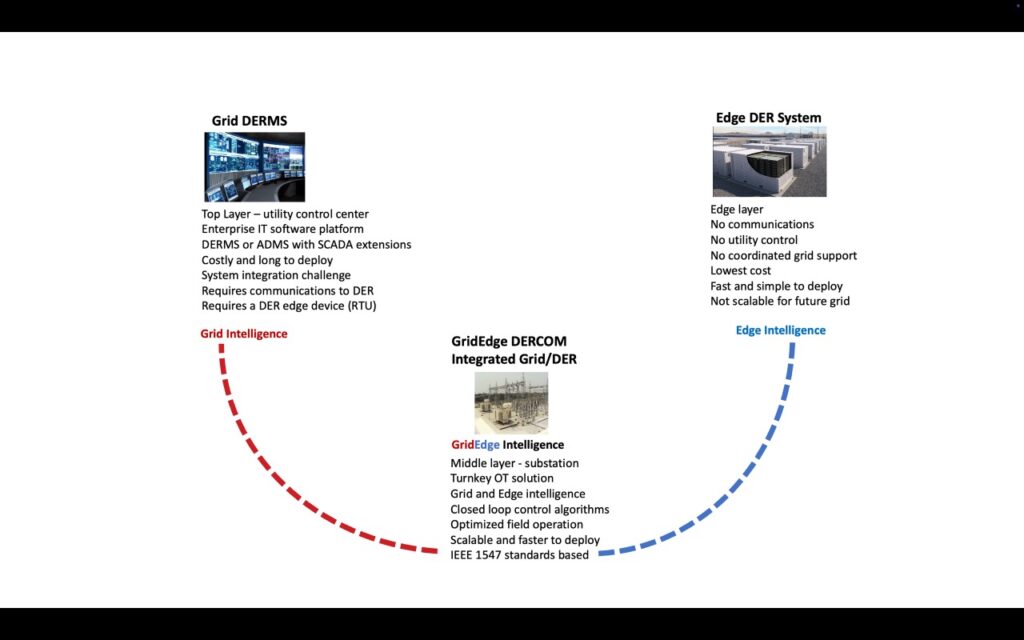
DERCOM: More flexible than firm upgrades, faster and less costly than centralized DERMS
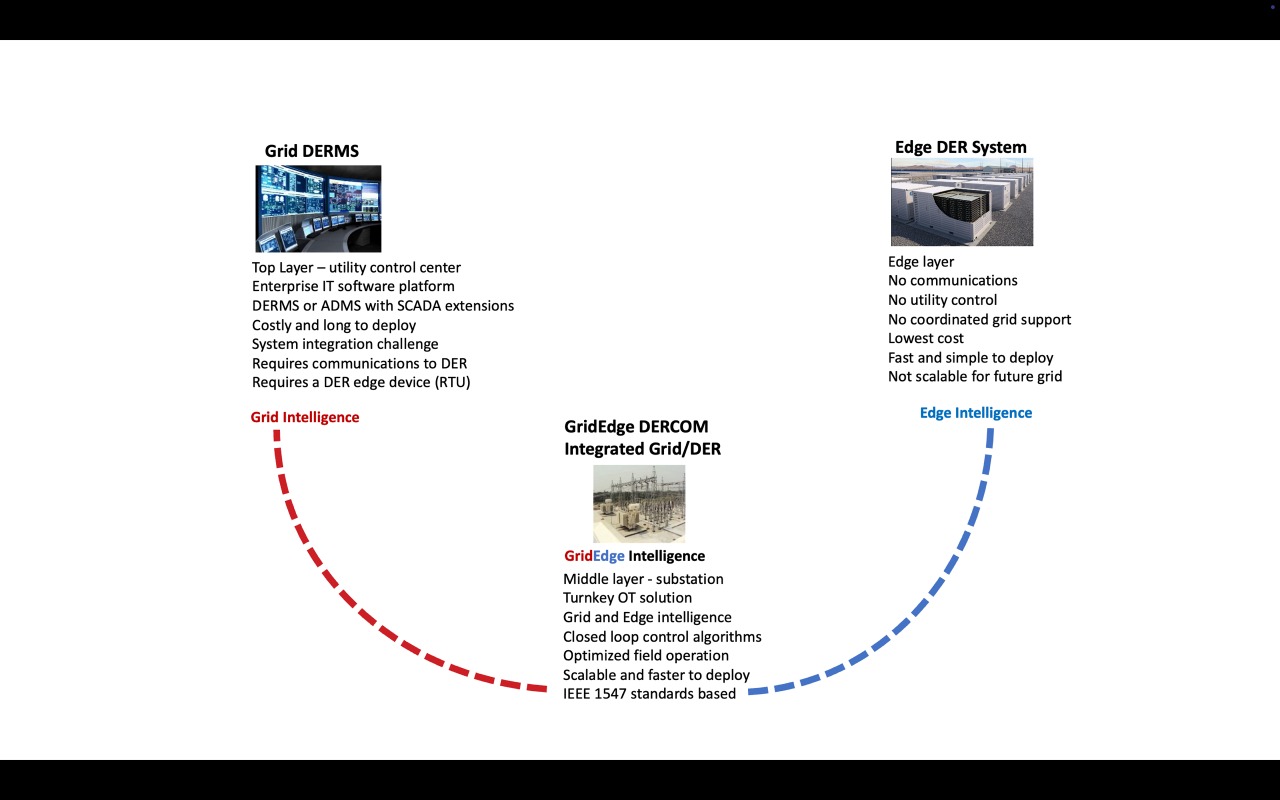
| Feature / Barrier | Traditional Firm Interconnection | Centralized DERMS | Substation DERCOM |
|---|---|---|---|
| Capacity solution | Build infrastructure upgrade | Forecast, plan, upgrade | Real-time constraint Management |
| Regulatory approval | No – works with existing interconnection process | Yes - requires regulatory approval | No – works with existing interconnection process |
| Deployment time | 18–36 months (supply chain challenges) | 18–36 months | 2–6 months |
| Turnkey solution | N/A | No – requires utility to install edge device and integrate communications | Yes – includes edge device and integrated communications |
| Cost | High cost to developer | Highest cost solution Paid through rate case | Low cost to developer, no cost to rate payer |
| Visibility into edge | Not provided through interconnection | Limited without purchase and integration of Edge DERMS | Local, real-time |
| Real-time DER coordination | None | Latency-prone | Sub-second local control |
| Flex-IX / V2G / DR support | Not supported | Requires customizations | Built-in |
| Utility integration effort | High | Very High | Minimal |
DERCOM: Technical Resources
DERCOM downloads for technical teams
DERCOM downloads for technical teams
- Get technical specs, system components, and ordering details.
 DERCOM System Data Sheet
 - Explore real-world strategies for constraint management and flexible interconnection. SOLAR PV Energy Storage Electric Vehicles Hybrid Configurations

Schedule a session for more information
Schedule a technical deep dive
Get a detailed walkthrough of DERCOM’s architecture, standards, and technical capabilities.
Book a project scoping consult
Discuss your grid challenges and explore how our products fit your deployment needs.

Back to Top